


If you've ever slipped your pup a blueberry off your cutting board and then immediately Googled whether that was okay — you're not alone. We've been there. The good news is that plenty of fruits and vegetables are not only safe for dogs, but genuinely good for them. And knowing the difference between what's healthy and what to avoid can make a real difference in your pup's daily wellness routine.
Here's what we'd do: treat fruits and veggies as what they are — natural, nutrient-rich snack options that complement a balanced diet. Not a replacement for your dog's regular meals, and not a cure-all, but a smart, simple way to add variety and nutrition to their day.
10 best fruits and vegetables for dogs
This guide covers the 10 best fruits and vegetables for dogs, how to serve them safely, what to watch out for, and which ones to avoid entirely. Let's dig in.
Why Fruits and Vegetables Are Good for Dogs
Dogs are omnivores, which means their digestive systems are built to handle both animal protein and plant-based foods. That doesn't mean your pup needs a salad every day — but it does mean that fruits and veggies can play a real supporting role in their overall health.
Fruits and vegetables for dogs offer a range of benefits: antioxidants that support immune function, fiber that aids digestion, vitamins and minerals that fill nutritional gaps, and natural hydration — especially helpful in warmer months. They're also a lower-calorie alternative to many commercial treats, which matters if your pup is managing their weight.
Real talk: not all fruits and veggies are created equal when it comes to dogs. Some are nutritional powerhouses. Others are downright dangerous. The key is knowing which is which — and that's exactly what this guide is for.

What Fruits Are Good for Dogs?
The short version is: many fruits are fine for dogs in moderation. Most safe fruits are high in natural sugars, so they're best offered as occasional treats rather than everyday staples — think of them the way you'd think of a Mighty Paw Yak Puff: a light, enjoyable reward, not a meal replacement.
Best Fruits Safe for Dogs
Here are the fruits your dog can enjoy safely:
Blueberries
One of the best fruits for dogs, full stop. Blueberries are packed with antioxidants that support cell health, plus vitamins C and K. They're bite-sized, easy to serve, and most pups go absolutely wild for them. Great as a training reward.
Watermelon
High in water content (roughly 92%), watermelon is a hydrating summer snack your dog will love. Just remove the seeds and rind before serving — those parts can cause digestive upset.
Apples
A solid source of vitamins A and C, and the crunchy texture can actually help clean your pup's teeth a bit. Always remove the core and seeds — apple seeds contain trace amounts of cyanide that can accumulate over time.
Bananas
Bananas are high in potassium and magnesium, which support muscle and heart health. They're also high in natural sugar, so keep portions small — a few slices goes a long way.
Strawberries
Rich in vitamin C and fiber, strawberries make a great occasional treat. Like bananas, moderation matters because of the natural sugar content. Fresh or frozen both work.
How to Serve Fruits to Your Dog
Here's what we'd keep in mind when introducing fruit to your pup's routine:
-
Start small. Introduce one fruit at a time and watch for any signs of digestive upset — loose stools, gas, or vomiting.
-
Remove pits, seeds, and tough rinds. These are the parts that cause problems. The flesh of most fruits is the safe part.
-
Keep portions appropriate. Fruit should make up no more than 10% of your dog's daily caloric intake.
-
Stick to fresh or frozen. Avoid canned fruit — it often contains added sugars or syrups that aren't safe for dogs.
Best Vegetables for Dogs
Vegetables tend to be lower in sugar than fruits, which makes them a great everyday snack option. Many vets and dog nutritionists recommend adding dog-safe vegetables into meal rotations as a simple, low-calorie way to boost fiber and nutrients.
Safest Veggies for Everyday Feeding
Carrots
Probably the most popular vegetable snack for dogs — and for good reason. Carrots are low in calories, high in fiber and beta-carotene (which converts to vitamin A), and the crunchy texture is great for dental health. Many dogs love them raw. Frozen carrot sticks can also be a soothing option for teething pups.
Green Beans
Low in calories and high in fiber — green beans are one of the go-to vegetables for dogs on a weight management plan. They're filling without adding unnecessary calories. Serve them plain, raw, or steamed. Skip canned versions with added sodium.
Cucumber
An excellent low-calorie, high-hydration snack. Cucumbers are about 95% water, making them a refreshing treat on warm days. They contain vitamins K, C, and B1, and most dogs enjoy the mild flavor and satisfying crunch.
Sweet Potato
One of the most nutrient-dense vegetables for dogs. Sweet potatoes are loaded with vitamins A, C, and B6, along with potassium and dietary fiber. Serve them cooked and plain — raw sweet potato can be difficult for dogs to digest.
Broccoli
A nutrient powerhouse — broccoli contains vitamins C and K, fiber, and folic acid. That said, it should be served in small amounts only. Broccoli florets contain isothiocyanates that can cause gastric irritation in larger quantities. A few small florets here and there is fine; a big bowl is not.
How to Prepare Vegetables for Your Dog
The basics are simple:
-
Plain is best. No butter, oil, garlic, onion, or seasoning. Many common cooking additions — especially garlic and onion — are toxic to dogs.
-
Raw or lightly steamed. Most vegetables are safe either way. Cooking can make some (like sweet potato) easier to digest, while others (like carrots) are perfectly fine raw.
-
Cut into appropriate sizes. Especially for smaller dogs or fast eaters — cut veggies into bite-sized pieces to avoid choking.
-
Introduce gradually. Any new food can cause mild digestive upset at first. Start with small amounts and build from there.
The 10 Best Fruits and Vegetables for Dogs (Full List)
Here's the complete rundown — the best fruits and veggies for dogs, all in one place:
-
Blueberries — Antioxidant-rich, easy to serve, great as a training treat
-
Watermelon — Hydrating and refreshing (seedless, no rind)
-
Apples — Vitamins A and C, crunchy texture (no seeds or core)
-
Bananas — Potassium and magnesium boost (small portions only)
-
Strawberries — Vitamin C and fiber, great fresh or frozen
-
Carrots — Low-calorie, dental-friendly, high in beta-carotene
-
Green Beans — Filling and fiber-rich, ideal for weight management
-
Cucumber — Hydrating, low calorie, great for warm weather
-
Sweet Potato — Nutrient-dense, great for digestion (cooked and plain)
-
Broccoli — Vitamin K and C powerhouse (small amounts only)
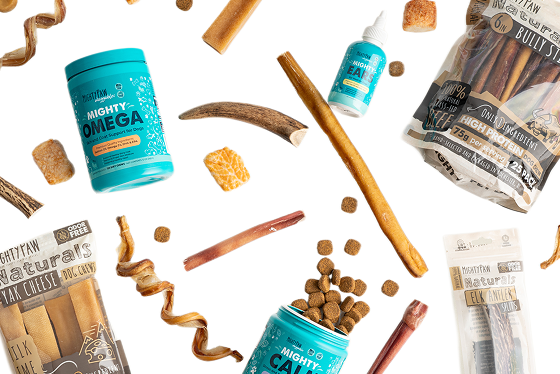
If you're looking to build out a complete snack rotation for your pup, whole fruits and veggies pair really well with natural chews. Our Mighty Paw Yak Cheese Chews (just three ingredients: milk, lime, and salt) give your dog a satisfying, long-lasting chew while you prep their veggie snack. And for pups who need something lighter — seniors, smaller dogs, or gentler chewers — our Yak Cheese Puffs are the airy, crunchy counterpart that's easy on teeth and just as satisfying.

What Fruits Are Bad for Dogs?
Here's where it gets important. Not every fruit that's good for humans is safe for dogs. Some are genuinely dangerous and worth knowing by heart.
-
Grapes and raisins — This is a hard no. Even small amounts can cause acute kidney failure in dogs. The exact toxic compound isn't fully understood yet, which makes it even more reason to keep grapes completely off the table.
-
Cherries — The flesh of a cherry is technically okay, but the pit, stem, and leaves contain cyanide. It's not worth the risk.
-
Avocado — Contains persin, a compound that can cause vomiting and diarrhea in dogs. Skip it.
-
Citrus fruits in large amounts — Small bits of orange flesh are typically fine, but the citric acid and essential oils in lemons, limes, and large citrus amounts can cause stomach upset and, in significant quantities, central nervous system issues.
-
Coconut in large amounts — Small amounts aren't harmful, but coconut products can cause loose stools and gastrointestinal issues in excess.
Fruits and Veggies to Always Avoid
Beyond fruit, there are several vegetables that are flat-out off-limits for dogs — no exceptions, no small amounts, no "just this once."
-
Onions, garlic, leeks, and chives — The entire allium family is toxic to dogs. They damage red blood cells and can cause hemolytic anemia. This includes cooked, raw, and powdered forms — garlic powder in seasonings counts.
-
Mushrooms — Wild mushrooms are a serious hazard. Some can be fatal. Plain white button mushrooms from the grocery store are generally considered safe, but because it's so difficult to tell wild varieties apart, we'd just skip mushrooms entirely.
-
Rhubarb — The leaves and stalks contain oxalic acid, which can cause kidney damage.
-
Raw potatoes and potato plants — Raw potatoes contain solanine, which is toxic to dogs. Cooked potatoes (plain, no seasoning) are generally fine.
-
Tomato plants — Ripe tomato flesh is generally okay in small amounts, but the stems, leaves, and unripe tomatoes contain solanine. If in doubt, skip it.
When in doubt, less is more. And if your pup gets into something they shouldn't have, contact your vet or the ASPCA Animal Poison Control Center immediately. No judgment — we've all been there.
One thing worth mentioning: if your dog is sensitive to certain foods or prone to digestive issues, building their immunity from the inside out can help. Our Mighty Allergy + Itch supplement supports immune health and seasonal skin sensitivities — which can sometimes be aggravated by dietary changes. Worth having in the rotation if your pup's stomach tends to be reactive.
Frequently Asked Questions About Fruits and Vegetables for Dogs
Can dogs eat fruit every day?
They can, in small amounts — but it's not necessary. Because most fruits are naturally high in sugar, daily servings should be kept small. A few blueberries or a couple of apple slices a day is fine. Think of fruit as an occasional treat, not a dietary staple.
What fruits are good for dogs with upset stomachs?
Plain canned pumpkin (not pie filling — just plain pumpkin) is actually one of the most effective foods for dogs with mild digestive upset. It's high in fiber and gentle on the gut. Bananas can also help if your dog has loose stools. For anything beyond mild upset, check in with your vet.
Can dogs eat vegetables raw?
Most vegetables are safe raw — carrots, cucumber, green beans, and broccoli all work well raw. Sweet potatoes are better cooked, as raw sweet potato is harder to digest. Always cut vegetables into appropriate sizes for your dog.
Are fruits and vegetables safe for puppies?
Yes, in small amounts — the same safe fruits and veggies apply to puppies. Just keep portions very small and introduce one at a time, since puppy digestive systems are still developing. When in doubt, check with your vet about what's appropriate for your pup's age and size.
How much fruit or vegetables can I give my dog?
The 10% rule is a good guideline: treats — including fruits and veggies — should make up no more than 10% of your dog's daily caloric intake. The other 90% should come from their complete, balanced dog food.
What's the fastest way to tell if a fruit or vegetable is safe?
The ASPCA has a comprehensive toxic plant and food database that's worth bookmarking. Your vet is always the best resource for questions specific to your dog's health history and dietary needs.
Final Thoughts: Building a Balanced Diet With Fruits and Veggies for Dogs
Adding fruits and vegetables to your pup's routine doesn't have to be complicated. A few blueberries as a training reward. Carrot sticks during their afternoon playtime. A little cucumber on a hot day. These small additions can genuinely support your dog's health — and honestly, watching them discover a new favorite snack is one of the best parts of being a dog parent.
The short version is: stick to the safe list, keep portions appropriate, and introduce new foods one at a time. Avoid anything on the "always skip" list, and when you're unsure, your vet is always your best resource.
And when your pup has earned a proper chew after all those healthy snacks? We've got you covered. Our Mighty Paw Yak Chews — made with just milk, lime, and salt — are a natural, long-lasting option that pairs perfectly with a wholesome daily routine. Because good nutrition starts with what we put in their bowl, and continues with everything we give them in between.
We do the research. You do the loving.— The Mighty Paw Team